
La tétine Clipp
07.04.2026
Do I really need several Clipp dummies... especially if I lose one?

For most families, a single Clipp dummy is sufficient: it supports the whole weaning process until the child no longer needs it. The idea is not to have spare dummies, but to help the child understand that this is a new stage: growing up. This symbolism takes on its full meaning from 2 to 3 years old, when the child begins to understand and name their emotions: involving them encourages their buy-in and pride.
Clipp was conceived as a dummy weaning device, designed with the support of health professionals to gently guide the end of non-nutritive sucking.
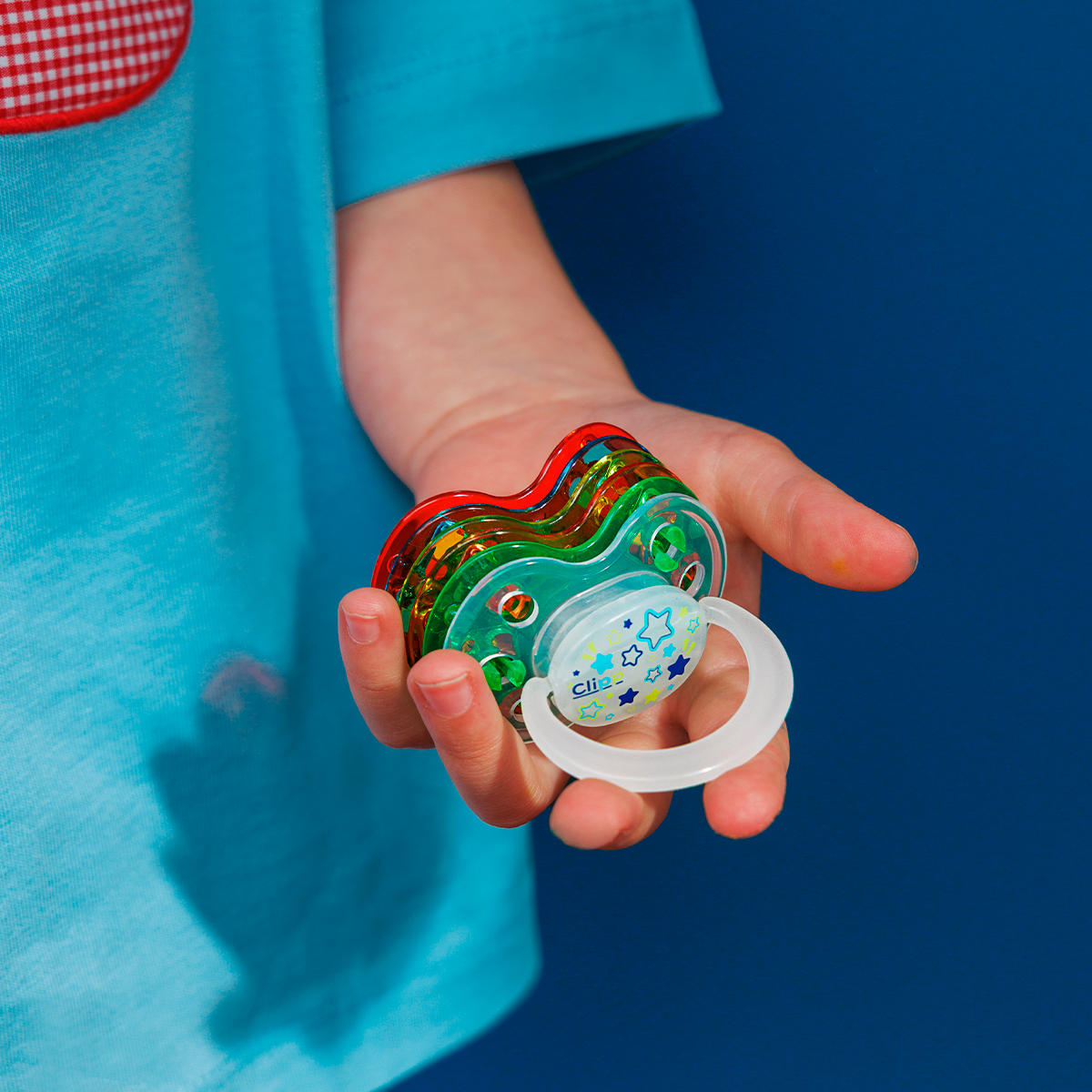
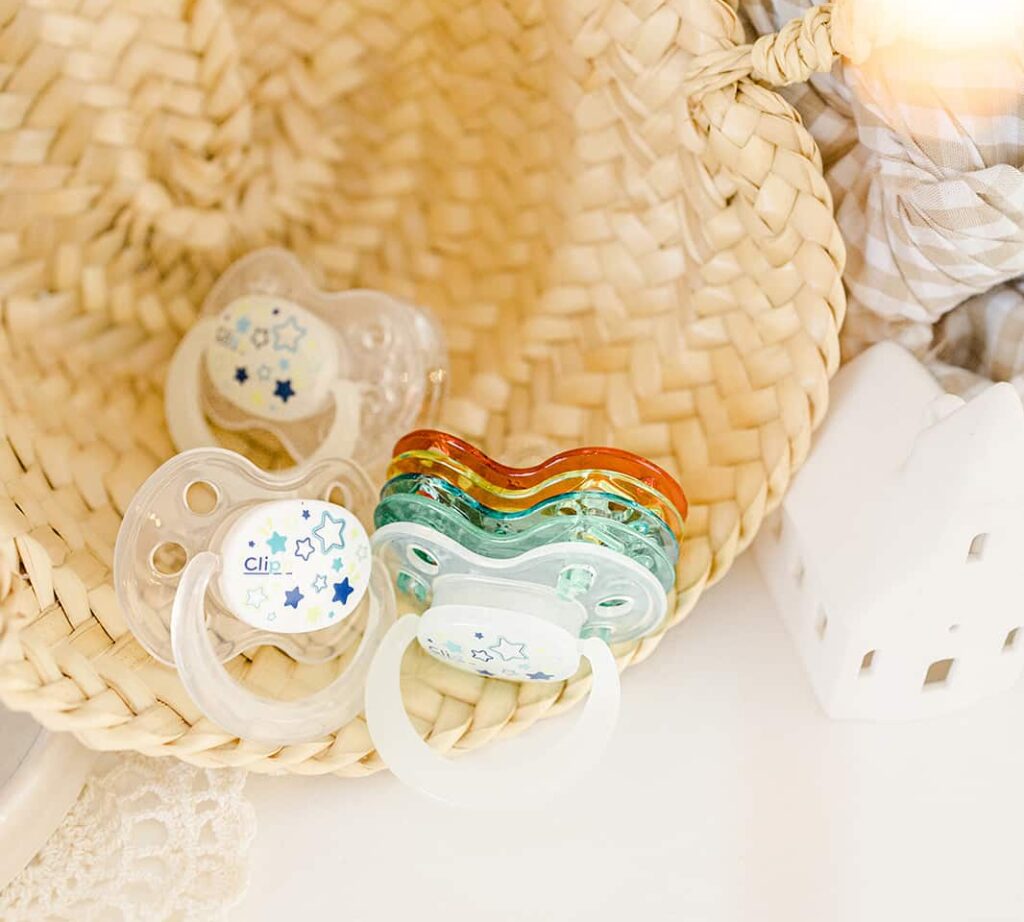
Thanks to its stackable shields, sucking gradually decreases step by step, without an abrupt stop or frustration. This gentle progression aims to limit the possible effects of prolonged sucking on the position of the teeth, jaw growth and functions such as breathing and swallowing.
Clipp is therefore not a mere replacement product: it is recommended by more than 5,000 healthcare professionals (speech therapists, dentists, paediatricians, occupational therapists...) who own a Clipp kit for professionals.
Because prolonged use can affect the teeth. The British Orthodontic Society notes that the length of time the habit lasts matters more than how hard the child sucks, and a common reference is to stop between 2 and 3 years old [1]. A gentle, positive approach also works better than force [1]. Clipp offers a gradual method so that stopping the dummy is gentle and free of guilt, respecting the child’s need for comfort.
Some family set-ups justify having two kits:
If you opt for two kits, keep consistent reference points: the same Clipp dummy, the same rules and the same progress.
Delivery is free from 2 kits (or from €39 of purchases), which can simplify organisation.
Don’t panic, it happens! Contact Clipp customer service: the team will help you and advise you on how to continue weaning.
For weaning to work, remove all other conventional dummies before introducing Clipp. If your child is somewhere where other dummies are around, choose a stable period (holidays, time at home) to avoid confusion. The goal is not to rush the process but to offer a calm, consistent environment where the child can take part fully. For age guidelines, see When should you stop the dummy? Age, signs and the right time for weaning.
Involving the child, presenting Clipp to them as “the magic dummy, the last one”, explaining each step and praising their progress: this is a method for stopping the dummy that encourages buy-in and success. Choosing a good moment, staying consistent among adults and celebrating small victories helps the child get through this stage with confidence. The British Orthodontic Society advises staying positive and using a wall chart with a daily reward system [1]. For more ideas, see How to introduce your child to the Clipp® dummy so that weaning is easy and How do you wean a baby off its dummy? A step-by-step method.
Dummy weaning is an important developmental milestone. With Clipp, it becomes a gentle, gradual process that follows the child’s pace. What matters most is consistency, trust and the bond between parent and child: Clipp helps turn this transition into a gentle and positive experience, leading to a dummy-free daily life with a smile.
Sources :