Arrêter la tétine
18.05.2026
Stopping the dummy after age 4: is it still possible?

Is your child over 4 and still using a dummy every day? You may be wondering when to stop, and whether weaning later is still possible.
Rest assured: it is, and you’re not alone. A common reference is to start limiting dummy use from around 6 to 12 months and to stop completely between 2 and 3 years old. If that age has passed, it’s best not to wait much longer, but stopping gently is still possible.
A common reference is to start limiting dummy use from around 6 to 12 months of age, and to stop completely between 2 and 3 years old.
Between 2 and 3 years, there is still time to organise gradual weaning with your child’s involvement.
From around 4 or 5 years, stopping becomes particularly important, with the help of a professional if needed.
For all the age references, see our guide on when to stop the dummy.

For many children, the dummy is much more than an object: a source of comfort, a way to soothe themselves, a faithful companion since birth.
For Gabriel, 6, it was there in every important moment. His parents had tried everything: giving it to Santa, putting it in a box, promising presents... Nothing worked.
This stronger attachment in older children is very common, and it doesn’t prevent weaning.
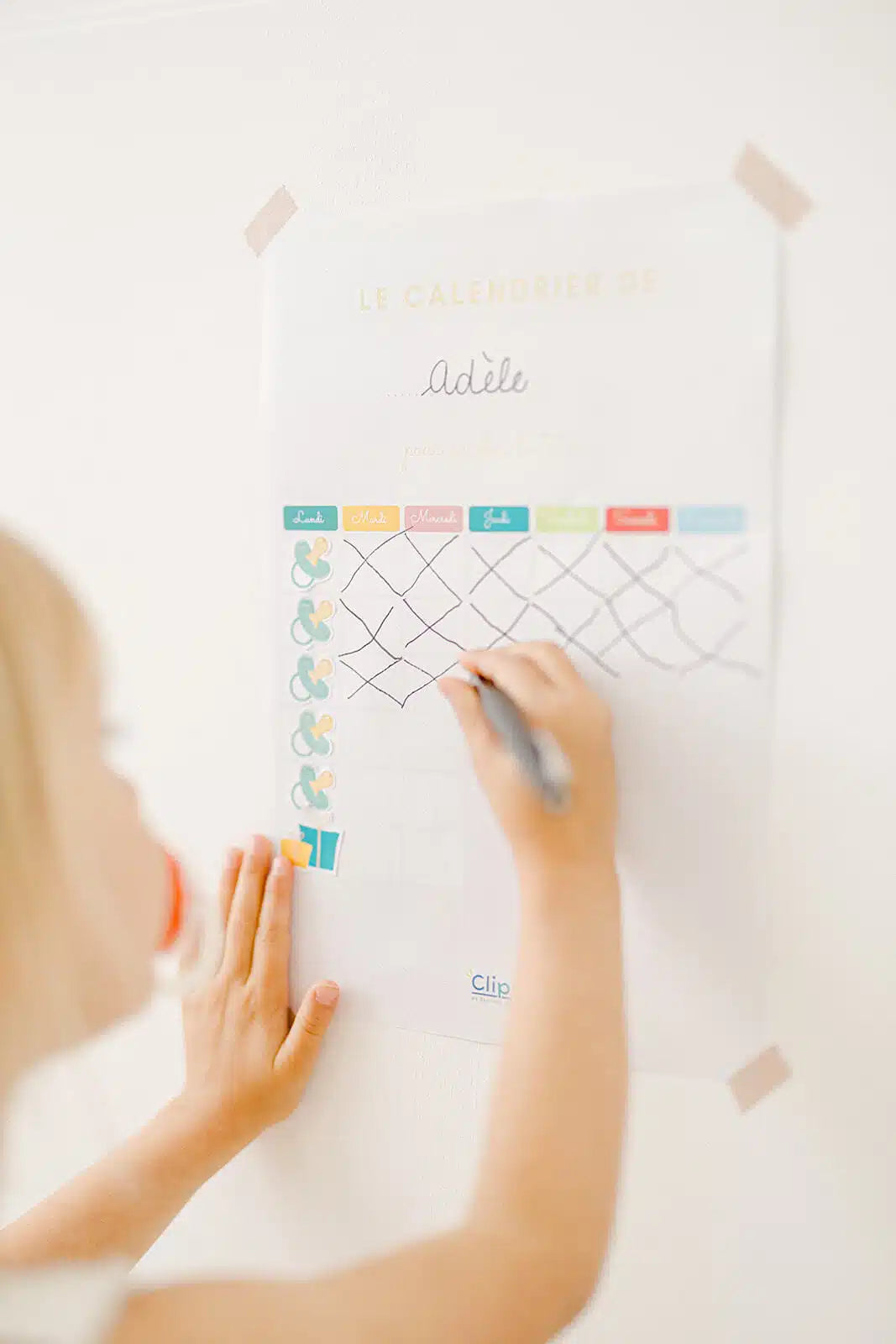
This involvement is an asset. The British Orthodontic Society advises staying positive, using a wall chart with a daily reward system, and avoiding nagging, teasing or punishing the child [1].

It’s better to wait during a period of strong anxiety or separation anxiety, a house move, starting nursery or school, or another major change, during an illness or great tiredness, or during a difficult time for the family. The same goes if your child is very attached to their dummy and doesn’t yet have other ways to comfort themselves. Postponing for a few weeks isn’t a problem, as long as you set a new date.
A birthday, the start of the school year, a holiday, a positive change of routine, a symbolic event that marks a new stage, a visit to the dentist, or simply a time when your child is already using their dummy less.

Yes, it’s better not to wait any longer if use is starting to affect how the teeth line up, if there is an open bite (front teeth that no longer meet) or a change in how the teeth fit together, if the dummy gets in the way of speech or interaction, if use remains very frequent as your child gets older, or if ear, nose and throat (ENT) or dental problems appear and a professional recommends cutting down or stopping.
Some early dental changes can improve after the habit stops, but the longer it lasts, the less likely this is, and the more likely it is to affect the teeth [1].
According to the British Orthodontic Society, what matters most is how long the habit lasts rather than how hard the child sucks, and effects are more likely if it goes on for more than about 6 hours a day [1].
Stopping before changes set in may reduce the need for orthodontic treatment later.
The Clipp weaning dummy works in steps: five shields are added one after another, gradually reducing the part available for sucking. Your child keeps their comfort item, with no abrupt removal.
For Gabriel, the system turned weaning into a game. “My love, it’s like a game – you’ll love it!” his mum told him. She also used the Dummy Weaning Toolkit : Gabriel ticked off each day and celebrated each “clip” added. This approach fits with the British Orthodontic Society’s advice to stay positive and use a wall chart with a daily reward system [1].
Gabriel eventually gave up his dummy without tears or protest. His mum also saw him gain confidence and feel more like a “big boy”, and she felt that his tongue posture and dental alignment were improving, which only a dentist can confirm.
Clipp was also assessed in a pilot study at Nice University Hospital (dental surgery thesis, Université Côte d’Azur, 2025), with 62 children aged 2 years to 7 years and 10 months. Among the 54 children who completed the follow-up, 51 stopped using their dummy (94.4%), in 46 days on average (from 2 to 138 days): every child goes at their own pace [2].
If your child uses a round dummy, here’s what to d.
If they get stuck at the 4th or 5th “clip”, find out how to help.
Talk to your dentist, orthodontist, GP, health visitor or speech and language therapist if your child still uses their dummy at around 4 or 5, if weaning causes significant distress, if they can’t reduce their use at all, if dental changes are already visible, if speech, breathing or ENT problems are involved, or if you’re unsure about the right moment.
Clipp supports stopping the dummy; it doesn’t replace medical advice.
If you feel guilty, know that many parents go through the same thing. Every small step counts, and it’s not too late to start.
Sources :