
Arrêter la tétine
18.05.2026
How do you wean a baby off its dummy? A step-by-step method

Giving up the dummy is an important stage in a child’s development, and it’s best to prepare for it. How do you wean a baby off its dummy without tears or conflict? At what age should you start, what rules should you set, and which rituals and alternatives can you offer? Here is a gradual method, in line with the advice of the British Orthodontic Society [1].
In babies, sucking is a natural reflex. It can reassure them, calm them and help them settle to sleep: the dummy becomes a real comfort object, and the child grows attached to it. Understanding this attachment helps you wean without rushing.

A common reference is to start limiting dummy use from around 6 to 12 months of age and to stop completely between 2 and 3 years old. According to the British Orthodontic Society, the length of time the habit lasts matters more than how hard the child sucks, and effects on the teeth are more likely if it goes on for more than about 6 hours a day [1]. A dummy is also easier to withdraw than a thumb if the habit continues [1].
In some cases, long-lasting sucking can also affect jaw growth and functions such as breathing and swallowing. To go further, see the impact of dummies on health and why remove your child’s dummy.
All the age guidelines are in when should your child stop using a dummy?, and for an older child, in my child is older.
Watch whether your child is using their dummy less on their own, becoming more independent and accepting other ways of calming down. On the other hand, very intense crying or persistent sleep problems are a sign to wait a little. Avoid starting during an already unsettled period (starting nursery, moving house, another big change). Instead, build on a positive event that marks a step towards more independence: a birthday, a holiday, Christmas.
Gradually reduce the situations in which the dummy is allowed, for example by limiting it to sleep or moments when your child needs comfort most. In practice: keep it for sleeping only, leave it in the bed, stop taking it out of the house, and stop offering it when your child is calm. Never cut or pierce a dummy to force weaning: a piece could come off and become a choking hazard. And never dip it in sugar, honey or sweet drinks.
Explain why it’s time to stop, talk about the benefits, and play on your child’s wish to “grow up”. Involving your child in the decision helps.

Dummy fairy, dummy tree, dummy box, a dummy given to a favourite character or to a comfort toy, a little goodbye ceremony, a symbolic gift... Many families use rituals like these: they turn a loss into a positive rite of passage. Clipp offers its own calendar with the Dummy Weaning Toolkit
Make up a personalised story with a character your child identifies with, or read a book about giving up the dummy.
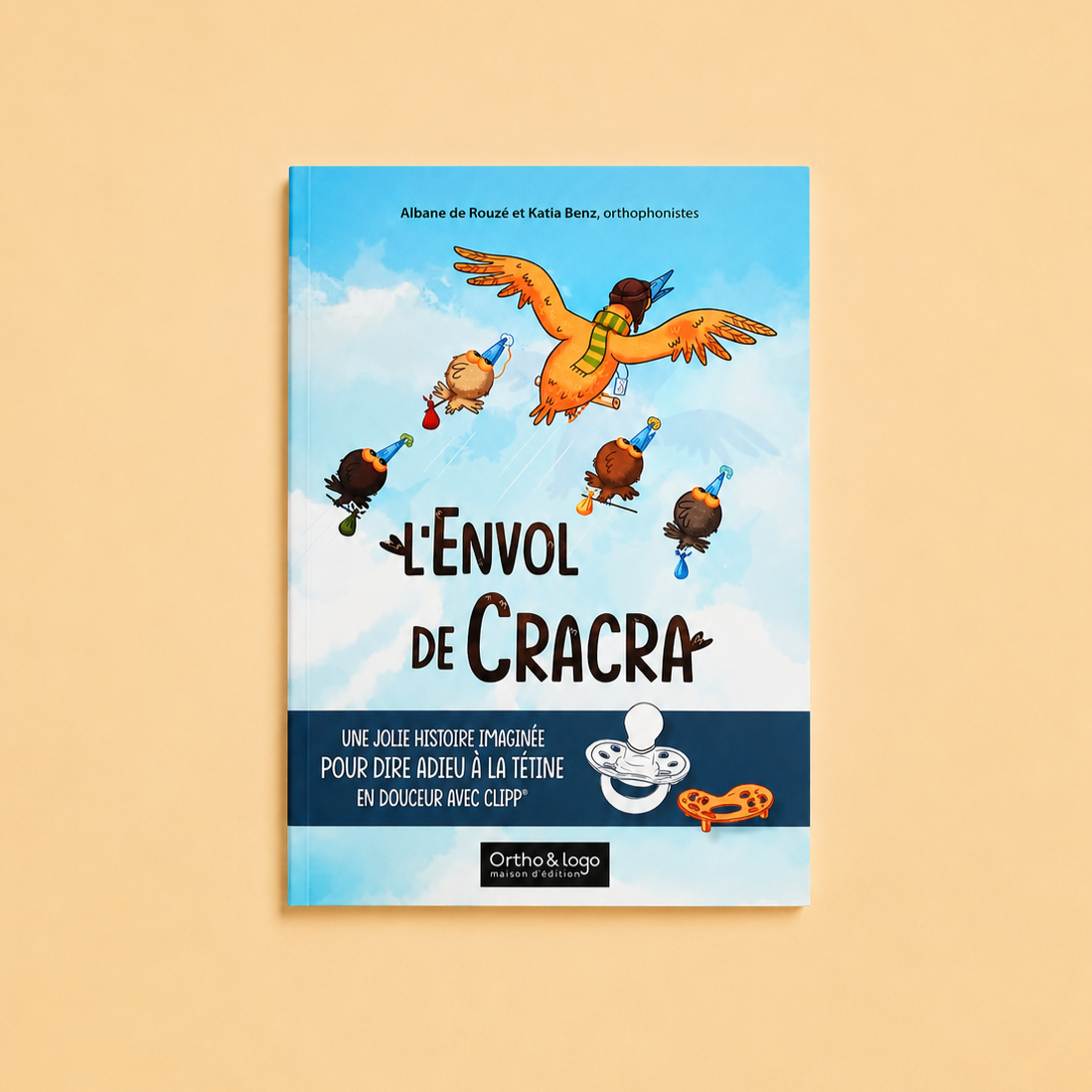
Celebrate a nap without the dummy, then a few hours, then a whole day. Praise your child and use a progress chart, stickers or symbolic rewards. The British Orthodontic Society advises a wall chart with a daily reward system, and advises against nagging, teasing or punishing the child [1].
After the dummy is taken away, your child may be more anxious, cry more, find it harder to fall asleep, wake in the night, be grumpy or ask for more attention. This period can last from a few days to a few weeks. Stay calm and comfort your child with cuddles, lullabies or quiet games: consistency and patience are key. Stopping suddenly or too early can make these reactions harder, and may lead some children to turn to their thumb, which is usually harder to stop than a dummy [1].
A comfort toy, cuddles, songs, a bedtime story, a new bedtime ritual: your child needs other ways to comfort themselves. Soft toys should not be left in the cot with babies under 12 months. Be careful not to replace the dummy with another sucking habit (thumb, comfort bottle)

The Clipp® weaning dummy, patented and award-winning, was devised by Arnaud and Virginie, parents, co-founders of Clipp and orthodontic professionals. It starts like a conventional dummy: after 2 days of adaptation without a shield, a shield is added each week, gradually shortening the teat, until the fifth shield marks the end of weaning. Each stage makes sucking less rewarding until the dummy is naturally abandoned, with no sudden removal: weaning usually takes about 4 weeks*. Your child keeps their comfort item, takes an active part in stopping and goes at their own pace, supported by the Dummy Weaning Toolkit. Clipp is recommended from the age of 2.
Clipp® was assessed in a pilot study at Nice University Hospital (dental surgery thesis, Université Côte d’Azur, 2025): among the 54 children who completed the follow-up, 51 stopped using their dummy (94.4%) [2].
Clipp has already supported more than 100,000 children and is recommended by more than 5,000 health professionals. If your child uses a round dummy, here is what to do. If they get stuck at the 4th or 5th shield, find out how to help them.
Talk to your dentist, orthodontist, GP, health visitor or speech and language therapist if your child is still using a dummy beyond the usual reference of 2 to 3 years, if weaning causes significant distress, or if you notice changes to the teeth, speech difficulties or ear, nose and throat problems. The Clipp® dummy supports dummy weaning; it does not replace medical advice
Every child is unique and weaning can take time: the key is to stay consistent, positive and patient.
* Every child is different, and weaning can take longer. In the pilot study, the average was 46 days(from 2 to 138 days) [2].
Sources :