
La tétine Clipp
07.04.2026
Do I really need several Clipp dummies... especially if I lose one?

For most families, a single Clipp pacifier is sufficient: it fully supports the weaning process until the child no longer needs it.
The idea is not to have spare pacifiers, but to help the child understand that this is a new stage: growing up. This symbolism takes on its full meaning from 2-3 years old, when the child begins to understand and name their emotions: involving them encourages their buy-in and pride.
Clipp was conceived as a pacifier weaning device, designed with the support of health professionals to gently guide the cessation of non-nutritive sucking.
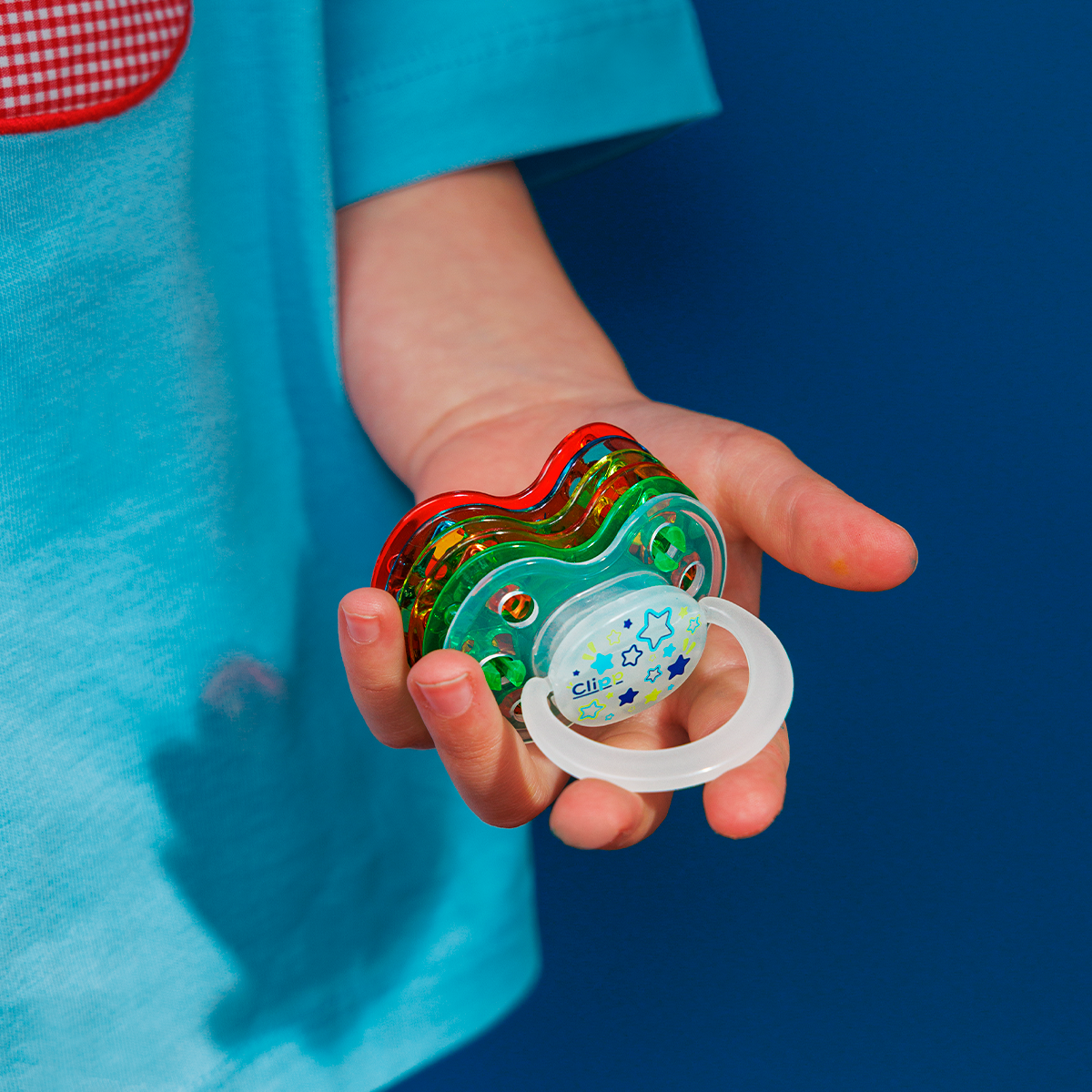
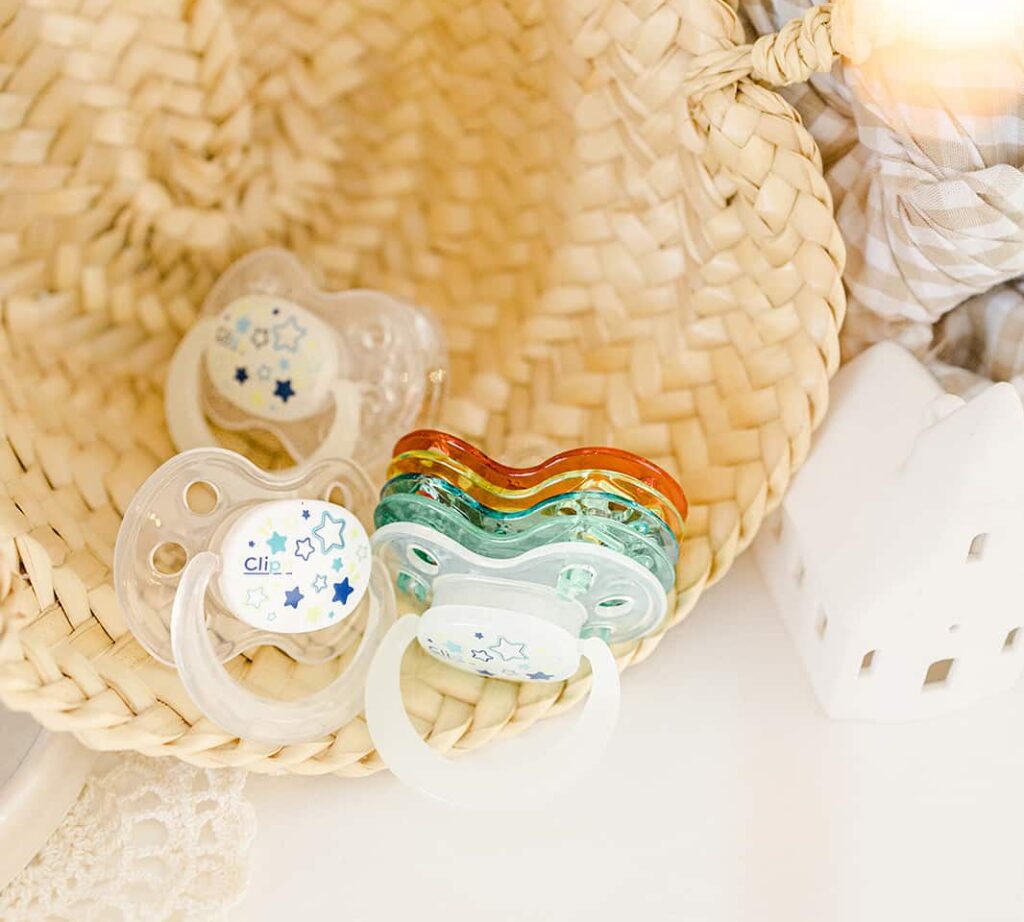
Thanks to its stackable collars, sucking gradually decreases step-by-step without abrupt rupture or frustration. This gentle progression aims to limit the consequences of prolonged sucking: speech impediments, palate deformation, or dental problems.
Clipp is therefore not a mere replacement product, but an approach supported by speech therapists, dentists, and child psychiatrists.
Because weaning from the pacifier prevents long-term effects on speech and dentition while respecting the child's need for comfort. Clipp offers a gradual method for pacifier cessation to be gentle, without guilt.
When can two pacifiers be useful?
Some family configurations justify having two kits:
Separate households (one pacifier per home)
Daycare, school or childminder (one at home, one for outside)
If you opt for two kits, keep consistent reference points: the same Clipp pacifier, the same rules and the same progress.
In France, shipping costs are free for two kits or more, which can simplify organization.
For weaning to work, be sure to remove all other classic pacifiers before introducing Clipp.
If the child is still in a place where other pacifiers are circulating, opt for a stable period (holidays, stay at home) to avoid confusion.
The goal is not to rush the process but to offer a serene, consistent environment where the child can fully engage.
Involving the child, presenting Clipp to them as "the magic pacifier, the last one," explaining each step, and praising their progress: this is a method for stopping pacifier use that encourages buy-in and success. Choosing an opportune moment, maintaining consistency among adults, and celebrating small victories helps the child navigate this stage with confidence.
Pacifier weaning is an important developmental milestone. With Clipp, it becomes a gentle, gradual, and respectful process tailored to the child's pace. What matters most is consistency, trust, and the bond between parent and child: Clipp helps transform this transition into a gentle and positive experience, leading to a pacifier-free daily life with a smile.