
Arrêter la tétine
16.04.2026
Why remove your child’s dummy?

A dummy soothes a baby and, during the first year, it is generally accepted. But prolonged use can have a negative impact on the development of a child’s teeth (as can sucking a thumb for too long). Long-lasting dummy use can be linked to changes in how the teeth and bite develop, such as malocclusion or tooth displacement. According to the British Orthodontic Society, the length of time the habit lasts matters more than how hard the child sucks, and a dummy is easier to withdraw than a thumb [1]. A common reference is to limit dummy use from around 6 to 12 months of age and to stop between 2 and 3 years old. Stopping in good time may also reduce the need for orthodontic treatment later on. For age guidelines, see stopping dummy use: what is the best age?
In the pilot study carried out at Nice University Hospital, 34 of the 38 children who had an open bite (where the front teeth no longer meet) at the start (89.5%) saw it reduce or correct by the end of weaning [2]. This study had no control group: it gives an encouraging signal, not definitive proof.
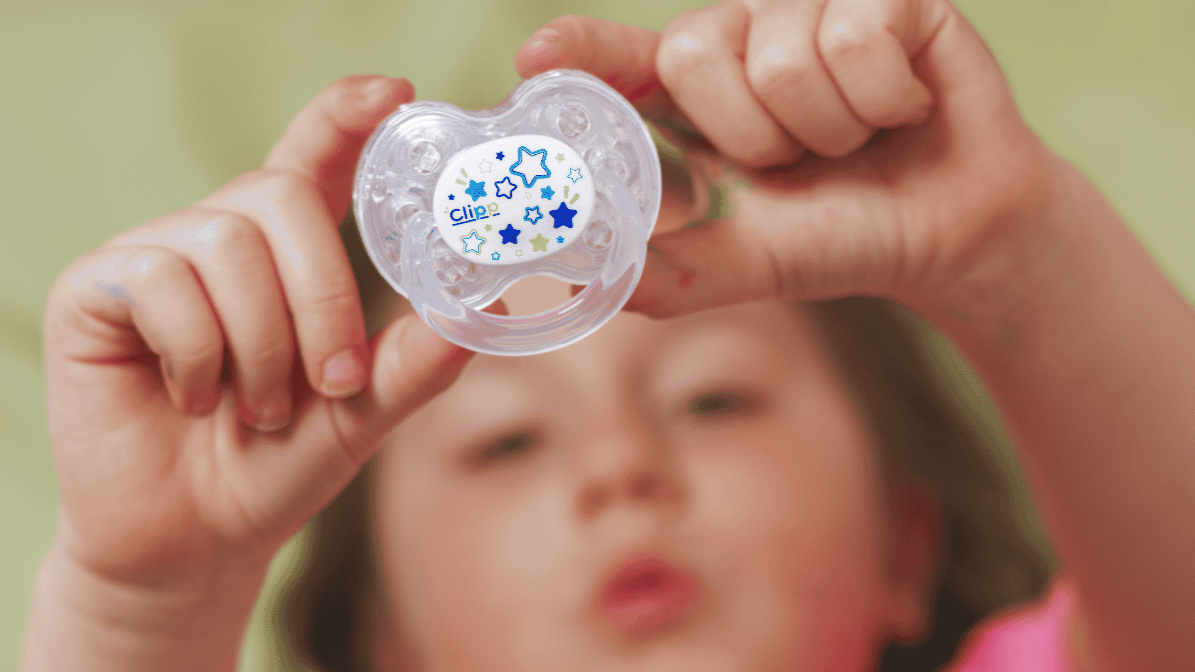
Kept in the mouth during the day, a dummy leaves fewer opportunities to babble and practise talking: the tongue and lips are used less to form sounds and words. However, the scientific evidence is limited, and language difficulties often have other causes. Without a dummy during the day, a child has more opportunities to practise. If you have any concerns about your child’s speech, talk to your health visitor, GP or a speech and language therapist.
A dummy that isn’t cleaned properly can carry bacteria. Clean it regularly following the manufacturer’s instructions, never by putting it in your own mouth (an adult’s bacteria can be passed on to the child), and never dip it in sugar, honey or sweet drinks, which can cause tooth decay
Giving up the dummy is an important stage in the development of your child’s independence. It encourages them to find other ways of comforting themselves and managing their emotions, which is an essential life skill. By removing the dummy, parents can help their children become more independent and develop healthier stress management strategies.
Although a dummy can help babies get to sleep, a child who falls asleep with one may ask for it every time it falls out during the night, which can mean more waking. Learning to fall asleep in other ways (a comfort toy, a story, a cuddle) can help bring calmer nights. Soft toys should not be left in the cot with babies under 12 months.
Once you’ve decided, how do you go about it?
See when to stop the dummy and how to wean a baby off its dummy, or how to stop your child’s dummy use gently.
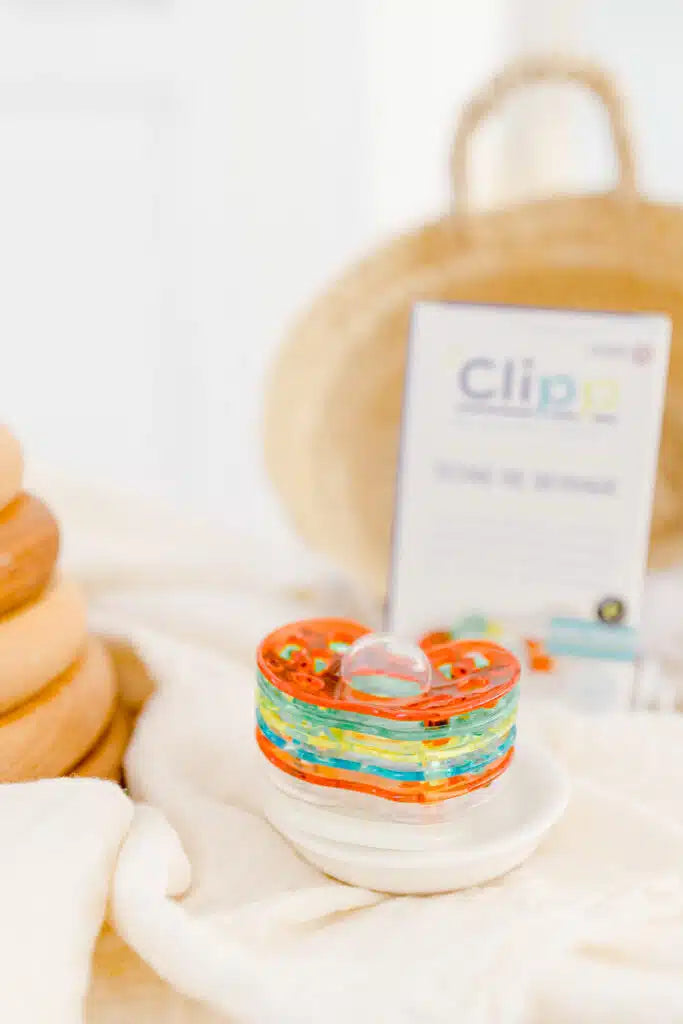
The Clipp® weaning dummy supports your child gradually, with no sudden removal: in the pilot study at Nice University Hospital, 51 of the 54 children who completed the follow-up stopped using their dummy (94.4%) [2].
Sources :